
A weathered steel gate can look like it needs a good wash, but water alone will not remove rust growing beneath old paint. That is where the choice between sandblasting vs pressure washing becomes clear. Both methods clean tough surfaces, but they do very different jobs. Choosing the wrong one can leave coating behind, damage a substrate, or create a finish that will not hold paint for long.
For property owners, equipment operators, and restoration professionals, the right method depends on what is on the surface, what the surface is made of, and what needs to happen next. If the goal is simply to remove dirt, pressure washing may be the practical answer. If the goal is to strip corrosion, failed coatings, or mill scale before refinishing, abrasive blasting is usually the stronger tool.
Sandblasting vs Pressure Washing: The Core Difference
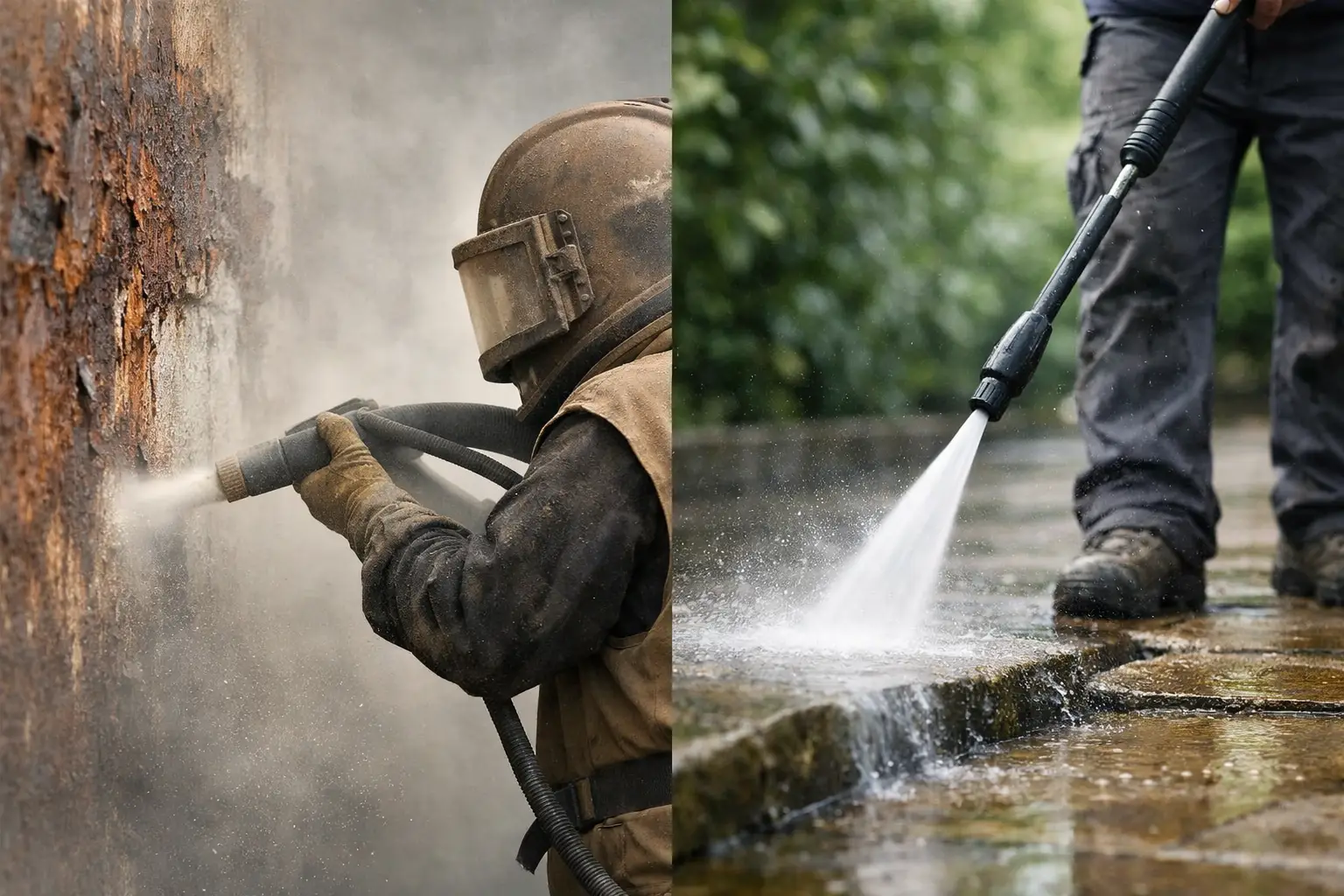
Pressure washing uses high-pressure water to rinse away loose dirt, mud, algae, salt residue, and some deteriorated paint. It is primarily a cleaning method. The results can be dramatic on siding, concrete, decks, patios, vehicles, and equipment covered in surface grime.
Sandblasting, more accurately called abrasive blasting in many applications, propels abrasive media at a surface to remove unwanted material. Depending on the media and pressure used, it can strip paint, rust, oxidation, scale, coatings, and embedded contamination. It also creates a surface profile that helps new paint, primer, powder coating, or protective finishes bond properly.
That distinction matters. A pressure washer can make rusty metal look cleaner, but it generally cannot remove all corrosion from pits, seams, edges, and under failing coatings. Blasting is designed to get to the actual surface so repairs and refinishing start on a sound foundation.
When Pressure Washing Is the Better Choice
Pressure washing is often the right first step when the main problem is buildup rather than coating failure. It works well on durable exterior surfaces where dirt, organic growth, road film, or loose debris is the issue.
For example, a concrete driveway with oil-stained dust and algae may benefit from pressure washing and a suitable cleaner. A commercial piece of equipment covered in mud can be washed before inspection or maintenance. Building exteriors, retaining walls, pavers, and outdoor work areas can also respond well when the objective is general cleaning rather than restoration.
It is usually less disruptive than blasting, especially on large exterior areas. There is no abrasive media to contain or collect, and the process can be faster for routine maintenance. Water use and runoff still need attention, particularly where detergents, oil, paint chips, or contaminated residue may enter drains or soil.
Pressure washing also has limits. High pressure can force water behind siding, damage wood fibers, etch soft masonry, strip loose caulking, and drive moisture into mechanical components. More pressure is not automatically better. The nozzle, distance, water volume, and surface condition all need to match the job.
When Sandblasting Delivers Better Results
Abrasive blasting is the better choice when a surface needs to be restored or prepared for a new protective coating. It is commonly used for steel railings, trailers, machinery, structural components, metal gates, automotive parts, tanks, industrial equipment, and durable masonry surfaces with stubborn coatings.
Blasting is particularly effective when rust has progressed beyond a light surface film. Corrosion does not stay flat and visible. It can spread under paint, settle into pitting, and hold moisture against the metal. A proper blast can remove the corrosion and failed coating from those hard-to-reach areas far more effectively than water pressure.
It is also valuable when adhesion matters. Fresh paint applied over chalky coating, oxidation, or smooth contaminated metal may fail early. Abrasive blasting removes the weak layer and leaves an appropriate texture for the next coating system. That preparation often determines whether a restoration lasts for years or starts peeling after one wet season.
Not every substrate should receive aggressive blasting. Thin sheet metal, delicate trim, soft wood, historic brick, and fragile stone require careful evaluation. The media may need to be softer, the pressure reduced, or another method selected. Professional blasting is not about using maximum force. It is about using the right media and technique to clean the surface without harming it.
Media Choice Changes the Outcome
The word sandblasting is familiar, but the abrasive media used should be selected for the material and finish required. Some jobs call for an aggressive media to remove heavy scale from steel. Others require gentler options for aluminum, sensitive metal parts, masonry, or restoration work.
Media selection affects stripping speed, surface profile, dust control, and the final appearance. A surface intended for industrial coating may need a different profile than a decorative railing being repainted. This is one reason blasting should be planned around the finish, not just the removal process.
Cleaning Power Is Not the Only Cost Factor
At first glance, pressure washing often appears less expensive because the equipment and setup are simpler. For routine cleaning, that can be true. If dirt and loose buildup are all that need to come off, blasting would add unnecessary cost and effort.
But the lowest initial price is not always the lowest project cost. If pressure washing leaves rust, old coating, or poor adhesion behind, the repainting stage may fail sooner. The job can then require another round of removal, repairs, materials, and labor.
Blasting generally involves more preparation, containment, labor, and cleanup. Those costs reflect the level of material removal and the care needed to protect the surrounding area. On a restoration project, it can save money by reducing rework and helping the new coating perform as intended.
A practical way to compare estimates is to ask what condition the surface will be in when the work is complete. Clean-looking is not always coating-ready. If repainting, powder coating, welding, or corrosion control is next, the preparation standard should be part of the conversation.
Consider Moisture Before Recoating
Pressure washing introduces a major variable: drying time. Water can sit in joints, rust pits, seams, bolt holes, and overlapping metal. If primer or paint is applied before the surface is fully dry, trapped moisture can compromise adhesion and encourage future corrosion.
This does not make pressure washing unsuitable before painting. It means the surface must be allowed to dry completely and inspected carefully. Weather, humidity, shade, and the shape of the asset all affect how quickly that happens.
Abrasive blasting does not create the same wet-surface issue, but bare metal should still be coated promptly. Freshly blasted steel is clean and exposed, which means humidity and airborne contaminants can begin affecting it quickly. The best workflow coordinates blasting, inspection, primer, and topcoat so the prepared surface is protected without delay.
Surface Safety and Site Control Matter
Both methods require more than pointing a nozzle or blasting hose at a problem area. Pressure washing can spread contaminated water, remove lead-containing paint chips, or harm nearby landscaping and fixtures. Blasting produces dust and spent media that must be managed, especially around buildings, vehicles, public areas, and sensitive equipment.
Older coatings deserve extra caution. They may contain hazardous materials, and removing them without proper assessment and controls can create risks for workers, occupants, and the surrounding property. A professional contractor will consider the coating type, access, containment needs, disposal requirements, and nearby surfaces before work begins.
For metal assets, masking and protection are also important. Bearings, seals, wiring, glass, rubber components, and precision-machined areas may need to be protected from either high-pressure water or abrasive media. Good surface preparation includes protecting what should remain untouched.
How to Choose for Your Project
Start with the end goal. If you want to remove seasonal grime from a durable exterior surface, pressure washing is often enough. If you need to remove rust, heavy paint, scale, or a failed coating before refinishing, blasting is more likely to deliver the preparation level you need.
Then consider the substrate and its condition. Concrete, steel, masonry, wood, aluminum, and mechanical equipment each respond differently. A badly rusted trailer frame and a stained concrete patio may both look neglected, but they do not need the same solution.
Finally, think about what happens after cleaning. A surface being left as-is has different requirements from one that will be painted, repaired, sealed, or powder coated. Gorilla Sandblasting approaches blasting work with that next step in mind, because the quality of the finish depends on the condition of the surface underneath it.
The best choice is the one that solves the actual problem, not just the most visible symptom. When rust, old coating, or surface failure stands between an asset and a durable new finish, proper preparation is where the restoration really begins.