
A painted surface can look like a simple cleanup job until the coating starts peeling in layers, rust is hiding underneath, or a new finish fails to stick. The right paint removal techniques do more than improve appearance. They expose the true condition of the surface and create the profile needed for repair, repainting, powder coating, or corrosion protection.
For durable materials such as steel, iron, concrete, brick, and heavy equipment, the best approach depends on the coating, the substrate, the job site, and the finish you want afterward. Fast is useful, but a clean and properly prepared surface is what protects the value of the work.
Choosing Paint Removal Techniques by Surface
There is no single method that fits every painted item. A steel trailer frame, a decorative aluminum gate, a concrete wall, and a piece of industrial equipment may all have old paint, but they require different levels of force and different media.
The first question is not simply, “How do I get this paint off?” It is, “What needs to remain when the paint is gone?” On heavy steel, a more aggressive process can remove thick coatings, rust, and mill scale efficiently. On thinner metal, softer masonry, or detailed components, the wrong method can cause warping, pitting, or unnecessary surface damage.
The second question is what happens next. If the surface will receive a high-performance coating, it usually needs more than bare-looking metal. It needs to be clean, free of corrosion, and prepared with the right surface texture for the new coating to grip.
Mechanical sanding and grinding
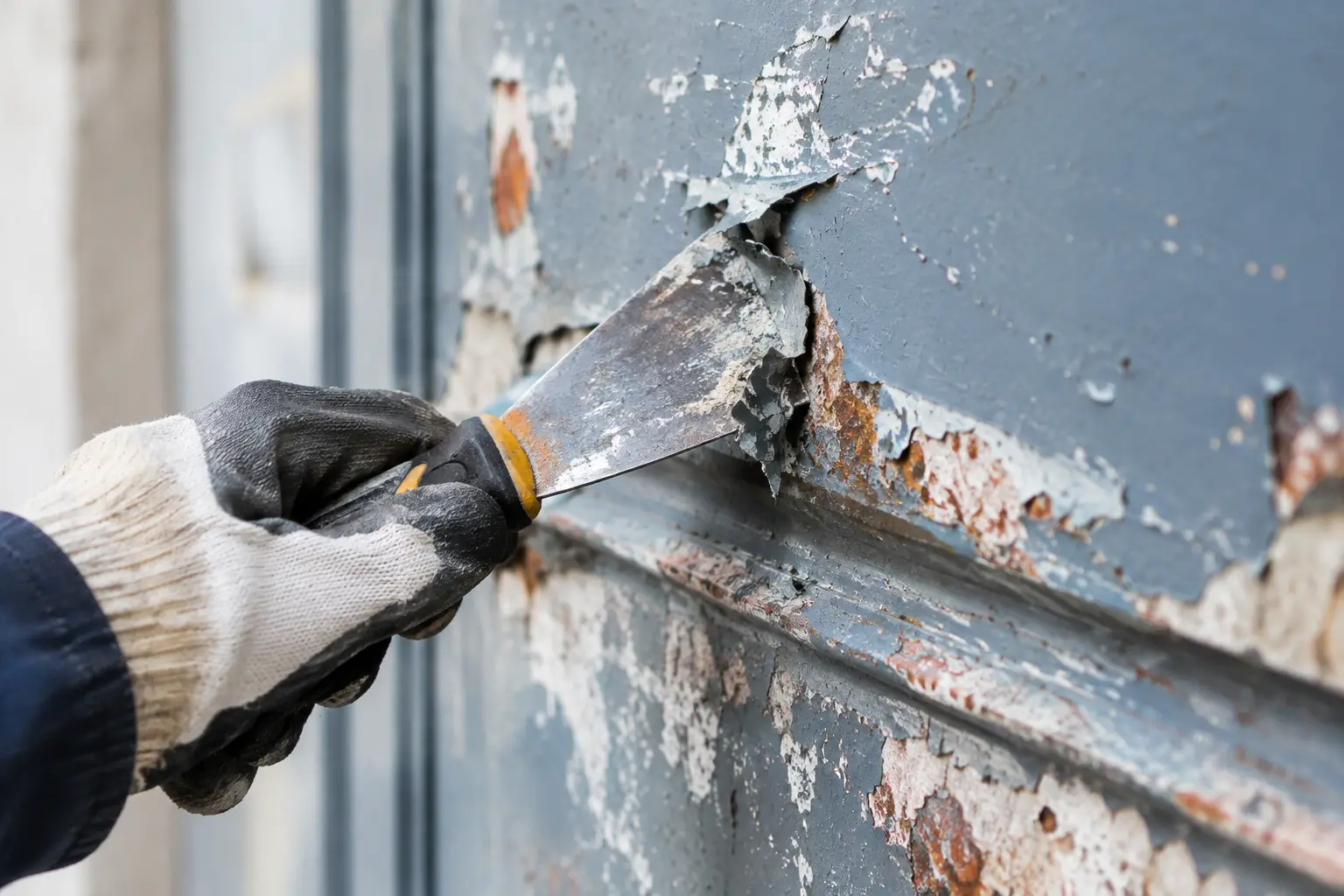
Sanding discs, wire wheels, scrapers, and grinders are familiar options for small areas. They work well when paint is loose, the surface is accessible, and only a limited repair area needs attention. These tools can also help feather the edges around a coating failure before spot priming and repainting.
Their limits show up quickly on large, irregular, or heavily rusted surfaces. Mechanical tools are labor-intensive and may leave paint in corners, welds, seams, and pits. A wire wheel can make corroded metal look cleaner without fully removing contaminants from the low spots where corrosion begins again.
Grinding also requires restraint. Aggressive discs can remove base metal along with the coating, especially on thin panels or detailed fabrication. It is often a practical preparation method for a small repair, not the most efficient answer for a full restoration.
Chemical stripping
Chemical strippers soften or loosen paint so it can be scraped or rinsed away. This can be useful on intricate items, trim, or surfaces where abrasive impact is not appropriate. Some coatings respond well to stripping, while others need repeated applications and substantial scraping.
The trade-off is cleanup. Chemical residue can interfere with a new coating if it is not fully removed, and the job creates waste that must be handled responsibly. Thick, multi-layer coatings can turn a supposedly simple stripping project into a slow process with inconsistent results.
Chemical methods can make sense for select materials and delicate details, but they are rarely the straightforward choice for large equipment, structural steel, or masonry with deep texture.
Heat-based removal
Heat guns and infrared tools can loosen paint for hand scraping. They are most useful on small, controlled areas where the operator can monitor the material closely. Heat can be effective, but it comes with obvious concerns around combustible materials, nearby finishes, glass, wiring, and concealed voids.
Older coatings add another concern. If a coating may contain lead or other hazardous materials, heating, sanding, or disturbing it without proper controls can create unsafe dust or fumes. Do not guess based on appearance or the age of the building or asset. Testing and proper containment should guide the work.
Abrasive Blasting for Heavy-Duty Coating Removal
Abrasive blasting is often the most effective option when paint removal involves large areas, thick coatings, rust, corrosion, scale, or hard-to-reach surface detail. The process propels a chosen blasting media against the surface to remove unwanted material and prepare the substrate at the same time.
For a steel railing, machinery component, trailer, tank, or structural piece, blasting can reach welds, corners, bolt areas, and textured sections that hand tools struggle to clean. It also makes hidden issues visible. Once old paint and rust are removed, cracks, deep pitting, poor repairs, and thinning metal are much easier to identify before a new coating goes on.
The word “sandblasting” is often used as a general term, but professional blasting is not one-size-fits-all. Media selection and pressure matter. A heavy steel component may tolerate a more aggressive approach than a thin panel, cast piece, or soft masonry surface.
Gorilla Sandblasting evaluates the material and the intended finish before selecting the process. That matters because the goal is not simply to strip paint quickly. It is to leave a clean, usable surface that is ready for the next stage of the project.
Dry blasting, wet blasting, and specialty media
Dry abrasive blasting is a common choice for durable metal and industrial work because it removes coatings efficiently and can create a strong profile for repainting. It requires appropriate containment and dust control, particularly when work is performed near occupied areas, neighboring property, or sensitive equipment.
Wet blasting combines water with abrasive media to reduce airborne dust. It can be a good option where dust control is a major concern, although freshly cleaned ferrous metal may require prompt drying and treatment to avoid flash rust. The right process depends on the asset, the work environment, and how quickly the surface will be primed.
Specialty media can offer a gentler approach. Soda blasting, plastic media, glass media, and other options may be selected when preserving the underlying substrate is more important than creating a heavy coating profile. These approaches can be useful, but they are not automatically better. For example, a gentle media may remove paint without addressing deep corrosion, while a residue from certain media may need additional cleaning before recoating.
What a Properly Prepared Surface Looks Like
Paint removal is only half the job. The surface should be evaluated for remaining coating, rust, oil, salts, dust, and loose debris. If any of these remain, they can compromise the bond between the substrate and the new primer or topcoat.
On metal, preparation often involves creating a consistent anchor profile. This is a controlled texture that gives the next coating something to grip. Too smooth, and the coating may not bond as intended. Too rough, and the finish may require extra material to cover the profile properly. The right balance depends on the coating system being applied.
On concrete or masonry, the goal may be different. Paint removal can reveal moisture issues, failed previous repairs, efflorescence, or damaged mortar. Aggressive blasting on the wrong surface can open up material that should have been preserved, which is why surface testing and experienced judgment matter.
A small test area is one of the smartest steps before committing to full-scale removal. It helps confirm how the coating responds, whether the substrate is sound, and what finish the process will leave behind.
When to Bring in a Professional
A do-it-yourself approach may be reasonable for a small painted bracket, a limited patch repair, or a surface that can be safely hand-sanded. Professional help is usually the better route when the job involves large equipment, extensive rust, commercial assets, thick industrial coatings, difficult access, or surfaces that need a dependable profile before refinishing.
It is also worth calling a professional when the cost of a poor result is high. Repainting a trailer, gate, piece of machinery, or steel structure twice is more expensive than preparing it correctly once. The same applies when an old coating may require testing, containment, or specialized cleanup.
Before requesting an estimate, take clear photos and note the material, approximate dimensions, current condition, and what you plan to do after removal. Mention whether the item will be painted, powder coated, repaired, or left exposed. Those details help determine the right paint removal method and avoid unnecessary work.
The best finish starts before the first coat of primer. Choose a removal process that respects the surface, exposes the problems worth fixing, and leaves the material ready for work that lasts.