
A steel railing can look like it only needs a fresh coat of paint until the new finish starts lifting six months later. The difference is usually what was left underneath. Knowing the five signs steel needs blasting helps you address the actual surface condition before spending time and money on a coating that cannot hold.
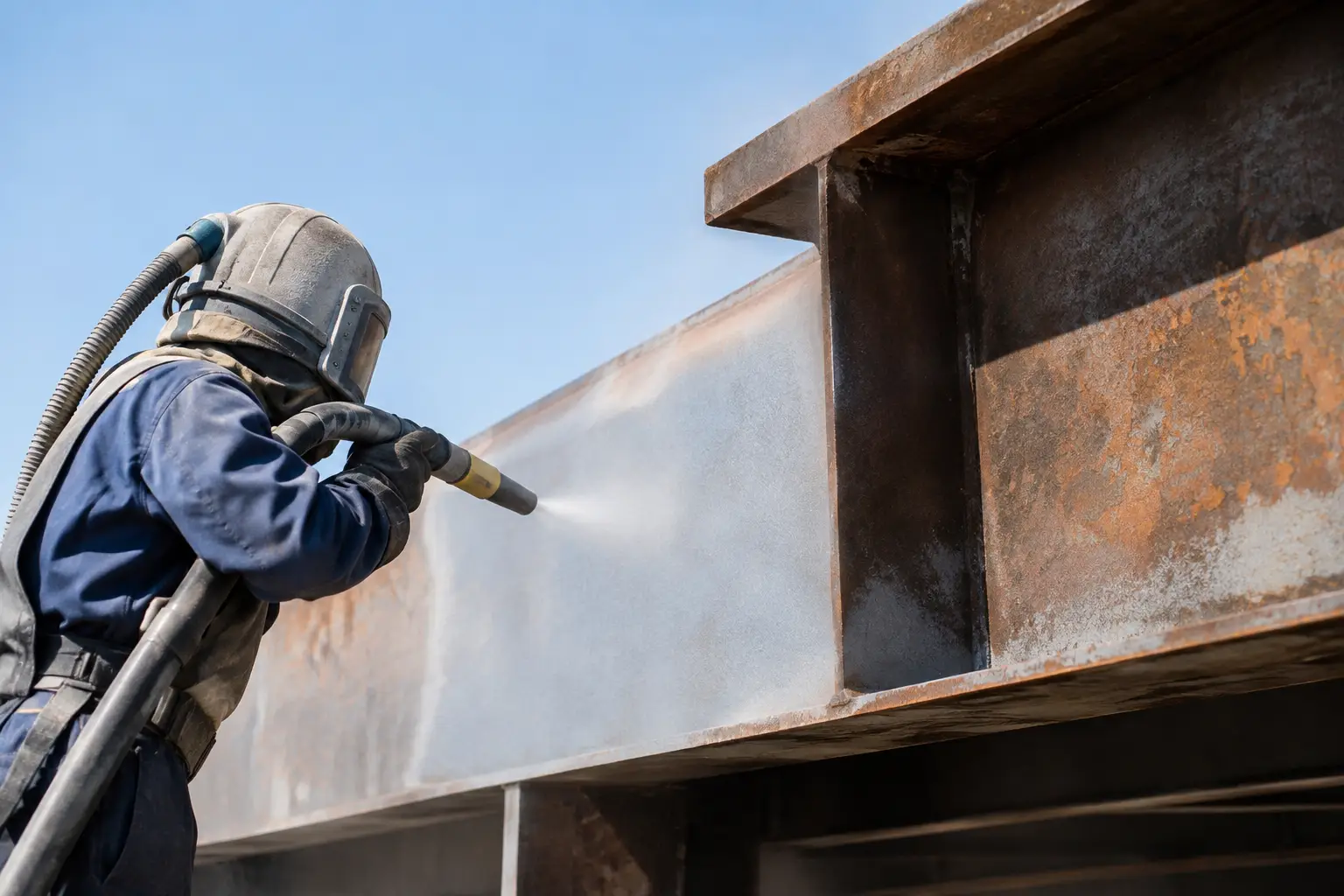
Abrasive blasting removes failed coatings, corrosion, scale, and embedded contaminants that ordinary washing, sanding, or wire brushing may leave behind. It is not the right answer for every piece of steel, but when the substrate needs a clean, consistent foundation, it can prevent a cosmetic repair from becoming a repeat job.
Five Signs Steel Needs Blasting
1. Rust is spreading beneath the paint
Rust does not always appear as a large orange patch. On painted steel, it often starts at chipped edges, welds, fasteners, corners, and areas where water sits. You may see bubbling paint, dark staining, flaking, or small pinhole-like spots. Those signs mean moisture has likely worked beneath the coating.
Painting over active rust may improve the appearance briefly, but it does not remove the corrosion layer or stop the steel from deteriorating beneath the new paint. Hand tools can help with a small, isolated spot if the surrounding coating is still sound. When corrosion is widespread, firmly attached in pits, or running under old paint, blasting is generally the more dependable preparation method.
Blasting exposes the true condition of the steel. Once the surface is clean, you can see whether the metal needs repair, welding, filler, or immediate priming. That visibility matters on railings, trailers, machinery, structural steel, gates, tanks, and outdoor equipment where corrosion can continue unnoticed.
2. The existing coating is peeling, cracking, or lifting
A coating fails for several reasons: age, UV exposure, moisture intrusion, impact damage, poor original preparation, or incompatible layers of paint. Whatever caused it, loose or lifting paint is not a stable base for the next finish.
Look closely at edges and damaged areas. If paint peels away in sheets, cracks in a web pattern, or releases when scraped, the coating bond has already failed. Repainting over it simply adds another layer to an unstable surface. The new coating is only as reliable as the material below it.
Abrasive blasting strips the failed coating back to a uniform surface so the next system can bond properly. It is especially useful where paint has built up through repeated maintenance cycles. Multiple layers can hide corrosion, dents, previous repairs, and contamination that should be dealt with before refinishing.
The right level of removal depends on the asset and the coating plan. In some cases, only damaged areas need treatment. In others, complete coating removal is the smarter choice because matching partial repairs to old, weathered paint can be difficult and short-lived.
3. Mill scale or heavy oxidation is present
Newer steel is not automatically ready for paint. Hot-rolled steel commonly has mill scale, a hard, dark surface layer created during manufacturing. It can look solid, but it may crack or detach as the steel expands, contracts, or begins to corrode. If paint is applied over unstable mill scale, the coating can fail along with it.
Heavy oxidation creates a related problem. Surface rust may be easy to spot, while thick layered scale can conceal deeper corrosion and make it hard for primer to contact clean metal. A wire wheel may polish high points without reaching valleys, pits, seams, and irregular shapes.
Blasting is effective because it can clean contours and create a consistent surface profile for the intended coating. That profile gives primers and industrial coatings something to grip. Too little profile can affect adhesion, while excessive aggression may not suit thin steel or detailed components. The media, pressure, and technique should match the steel thickness, shape, and finishing requirements.
4. Grease, grime, and contaminants keep returning
Steel used in shops, marine environments, agricultural work, transportation, and industrial settings collects more than dirt. Oil, grease, road film, soot, salts, chemical residue, and old adhesive can settle into seams and rough surfaces. These contaminants interfere with coating adhesion and can cause fisheyes, blistering, or early peeling.
Cleaning is still the first step. Blasting is not a substitute for proper degreasing, particularly where oil is heavy. If grease remains on the surface, blasting can drive it around rather than remove it. A professional preparation process addresses soluble contaminants and oils before abrasive work, then keeps the cleaned steel protected from flash rust and new contamination.
If a surface has been cleaned repeatedly but still feels stained, uneven, or difficult to coat, contamination may be embedded in the old coating or corrosion layer. Blasting removes those compromised layers instead of asking a new finish to bridge over them.
5. You are repairing or repainting an asset that needs to last
The final sign is not always visual. Sometimes the condition of the project itself calls for a higher standard of preparation. If you are restoring a valuable piece of equipment, preparing steel for powder coating, repairing a trailer, repainting commercial components, or protecting an outdoor metal feature, surface preparation should match the expected service life.
A quick cleanup may be appropriate for a temporary touch-up or a low-demand item. It is less appropriate when the steel will see road salt, rain, abrasion, chemicals, frequent handling, or regular temperature changes. The cost of stripping and preparing the surface is often lower than the cost of removing a failed new coating later.
Blasting can also make inspection easier before the finishing work begins. Clean steel reveals pinholes, thin areas, cracked welds, previous patchwork, and corrosion damage that paint can conceal. Finding those issues before coating gives you a chance to make a sound repair rather than trapping a problem under a finished surface.
When Blasting May Not Be the Best First Step
Blasting is powerful, but it should be selected with care. Thin sheet metal, delicate components, and parts with tight tolerances can distort if the wrong media or pressure is used. Some coatings may also require special handling, particularly if their age or composition is unknown. Lead-containing paint and other hazardous materials need proper assessment and containment before removal work begins.
There is also a difference between a small paint chip and a broadly failing finish. A localized area with clean, solid surrounding paint may be repaired through careful mechanical preparation, spot priming, and repainting. The decision depends on how far the corrosion extends, what coating is planned, and how demanding the asset's working environment will be.
For steel that does need blasting, timing matters. Bare metal should not sit exposed longer than necessary, especially in damp conditions. Once prepared, it should be inspected and primed or coated according to the chosen coating system. Good blasting creates the foundation, but the full result depends on using compatible products and applying them within the recommended window.
What a Professional Assessment Should Consider
Before work starts, a practical assessment looks beyond the visible rust. The steel's thickness, shape, access points, existing coatings, intended finish, and service environment all affect the preparation plan. An equipment part, a decorative gate, and structural steel may all need cleaning, but they do not necessarily need the same media, surface profile, or coating process.
Gorilla Sandblasting approaches surface preparation with the end result in mind: a clean surface ready for repair, paint, powder coating, or corrosion protection. Clear expectations at the estimate stage help determine whether full blasting, targeted removal, or another preparation method makes the most sense for the project.
If steel is showing rust blooms, lifting paint, scale, stubborn contamination, or signs of deeper deterioration, waiting rarely makes the repair easier. Addressing the surface before the next coating goes on gives that finish a fair chance to do its job - and gives you a clearer view of the steel you are protecting.