

A new coating can look excellent on day one and still fail before the next season if it is applied over weak, dirty, or damp concrete. This concrete surface preparation guide focuses on the work that determines whether paint, epoxy, sealers, and repair materials actually hold up. The goal is not simply to make concrete look clean. It is to create a sound, dry, properly profiled surface that can accept the finish you have chosen.
Start by identifying what is on the concrete
Concrete is rarely a blank surface. A garage floor may have oil spots, tire residue, old paint, curing compound, or a clear sealer that is hard to see. A retaining wall may carry algae, efflorescence, weathered coatings, and loose mortar. Industrial slabs can have years of grease, traffic film, and prior repairs in the same area.
Before choosing a cleaning or blasting method, inspect the full surface in good light. Look for peeling coatings, glossy areas, soft or powdery concrete, cracks, spalling, and dark moisture marks. Tap questionable areas with a hammer or use a scraper to find loose material. If the concrete itself is weak, no amount of surface cleaning will turn it into a reliable base.
This inspection also helps define the project scope. A lightly weathered walkway may only need cleaning and a modest surface profile. A floor with failed epoxy or a wall with multiple paint layers needs more aggressive removal. Treating every concrete surface the same is an expensive way to get an inconsistent result.
Remove contaminants before creating a profile
Abrasive blasting can remove coatings and open concrete, but it should not be expected to solve every contamination problem by itself. Oil, grease, wax, silicone, and some chemical residues can be driven deeper into pores or spread across the surface when handled poorly.
Start with dry removal of loose dirt, scale, and debris. Then use the cleaning method that matches the contamination. Degreasers can work well for petroleum residue when they are given time to dwell and are thoroughly rinsed away. Pressure washing helps remove dirt, salts, and detergent residue, but it does not replace a degreasing step where oil is present.
Efflorescence deserves special attention. The white, chalky deposit is a sign that moisture has moved through the concrete and left salts behind. Brush or blast off the deposit, but also consider why moisture is moving through the slab or wall. A coating applied without addressing that condition may blister or release later.
After wet cleaning, allow enough drying time. The right amount depends on slab thickness, weather, ventilation, and how much water was used. Concrete can feel dry on top while retaining moisture below the surface. Rushing this stage is one of the most common causes of coating failure.
Create the right concrete profile
Surface profile is the texture left behind after preparation. Coatings need a mechanical bond, meaning they need microscopic peaks and valleys to grip. Smooth, hard-troweled concrete often looks clean but provides too little tooth for many coating systems.
The required profile depends on the product being installed. Thin paints and sealers generally need a lighter profile. High-build epoxy, urethane cement, polymer overlays, and thicker repair products commonly require a more open texture. The coating manufacturer should always have the final say, because applying a product outside its surface-preparation requirements can affect performance and warranty coverage.
For larger or heavily coated areas, abrasive blasting is often an efficient option. It removes old coatings while producing a controlled profile, and it can reach textured or irregular concrete that grinding may miss. The abrasive media, pressure, nozzle setup, and operator technique all matter. Too little force leaves coating behind. Too much can damage sound edges, expose aggregate unnecessarily, or create a profile that is too rough for the intended finish.
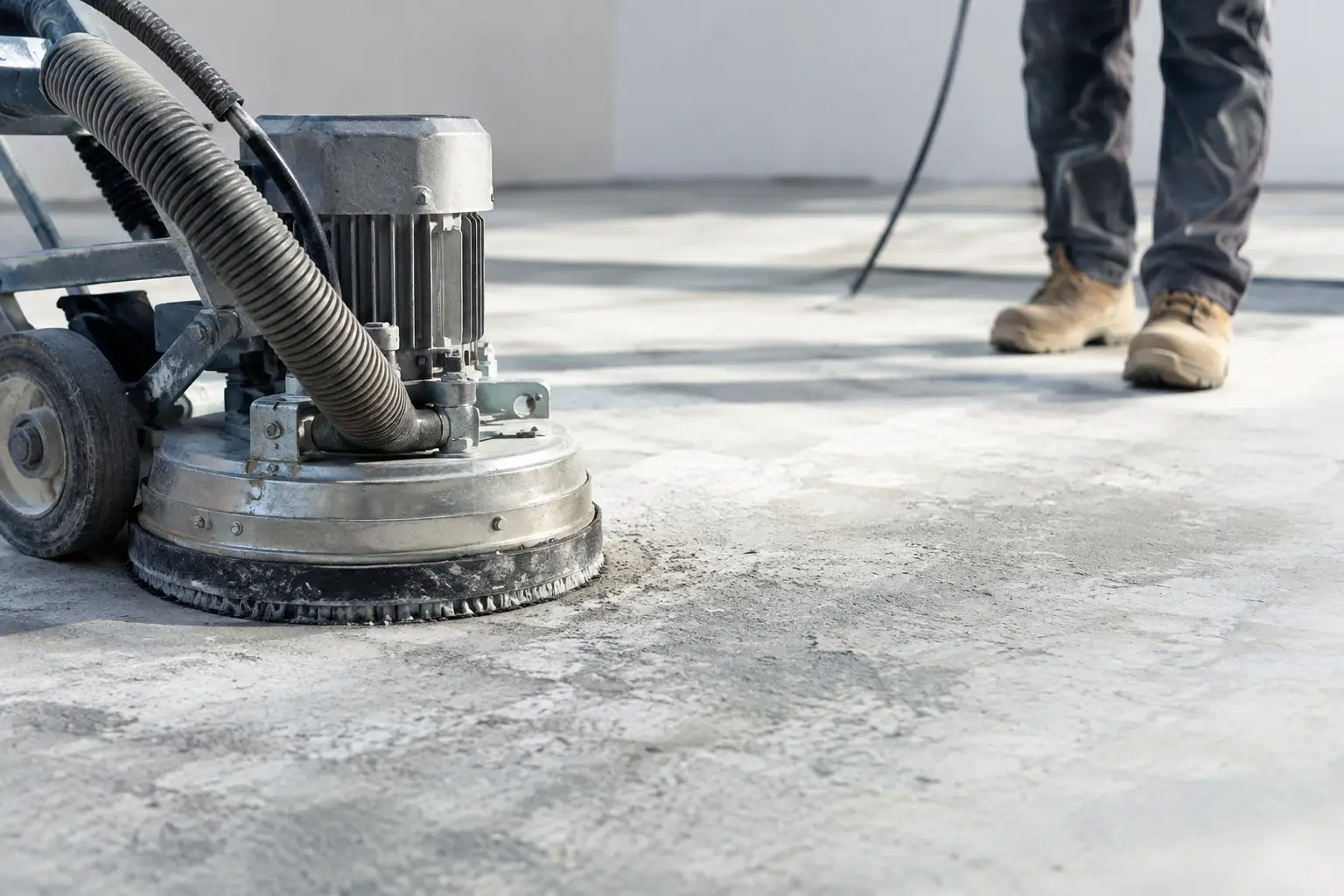
Grinding is another common method, especially for floors where dust control and a uniform finish are priorities. It is effective for smoothing high spots, removing thin coatings, and preparing accessible flat slabs. Acid etching is sometimes discussed for concrete preparation, but it is not a shortcut. It can leave salts or uneven results when the slab is contaminated, dense, or improperly rinsed. Mechanical preparation is usually more predictable when a durable coating system is planned.
Repair defects after the surface is opened
Preparation reveals problems that old paint and grime can hide. Once the surface is clean, cracks, pop-outs, exposed aggregate, and damaged joints become easier to assess. This is the right time to decide which defects need repair before a topcoat goes on.
Not every crack should be filled the same way. A stable hairline crack may be treated differently from an active crack that moves with temperature changes or settlement. Rigid filler in a moving crack can split again and telegraph through the new coating. Expansion and control joints also need to remain functional unless the selected flooring or coating system specifically addresses them.
Remove loose concrete from spalled areas until solid material is reached. Then use a repair product compatible with the environment and final finish. Exterior repairs need to tolerate freeze-thaw exposure and moisture movement. A heavy-traffic shop floor needs a repair material that can handle impact and abrasion. Repairing over dust, weak edges, or hidden moisture only moves the failure date closer.
Verify dryness and surface condition
A concrete surface can pass a visual inspection and still be unsuitable for coating. The last checks should confirm that dust, moisture, temperature, and profile are within the coating system's requirements.
Vacuum the surface thoroughly after blasting or grinding. Sweeping alone often leaves fine dust in pores and along edges. Wipe tests can help identify remaining dust, but avoid adding unnecessary moisture right before coating. If the project involves a high-performance coating, moisture testing may be required. Test methods vary, so follow the product specifications rather than relying on one general rule.
Temperature matters too. Concrete can be colder than the surrounding air, especially in unheated buildings or shaded exterior areas. If the slab temperature is near the dew point, condensation can form even when the surface appears dry. That invisible film can interfere with adhesion. Plan the work around actual site conditions, not just the forecast or thermostat setting.
Match the preparation method to the project
There is no single best approach for every slab, wall, or concrete structure. A homeowner preparing a patio for a penetrating sealer has different needs than a facility manager restoring a loading area or a contractor installing an epoxy floor.
For an outdoor concrete wall with failing paint, coating removal and a clean, even profile may be the priority. For a garage floor, oil removal, moisture assessment, and edge preparation are often just as important as stripping the old finish. For equipment pads or commercial surfaces, downtime, containment, dust management, and surrounding assets may determine which preparation method is practical.
Professional blasting is particularly useful when coatings are stubborn, surfaces are irregular, or the project demands consistent preparation across a larger area. Gorilla Sandblasting approaches this work as more than coating removal: the prepared surface has to support what comes next, whether that is repair, paint, protective coating, or restoration.
Do not lose the surface after preparation
Once concrete has been properly prepared, protect it from new contamination. Keep traffic off the area, prevent oil or water from reaching it, and avoid handling it with dirty tools or footwear. Schedule coating work so there is as little delay as possible between preparation and application, especially in dusty, humid, or active work environments.
If the surface must sit before coating, inspect it again. Dust can settle, moisture can return, and flash contamination can occur on nearby metal or equipment. A quick re-cleaning step may be enough, but do not assume yesterday's prepared surface is still ready today.
Good concrete preparation is disciplined work, not cosmetic work. When the slab is clean, sound, dry, and correctly profiled, the coating has a fair chance to do its job. That is the foundation worth protecting.