
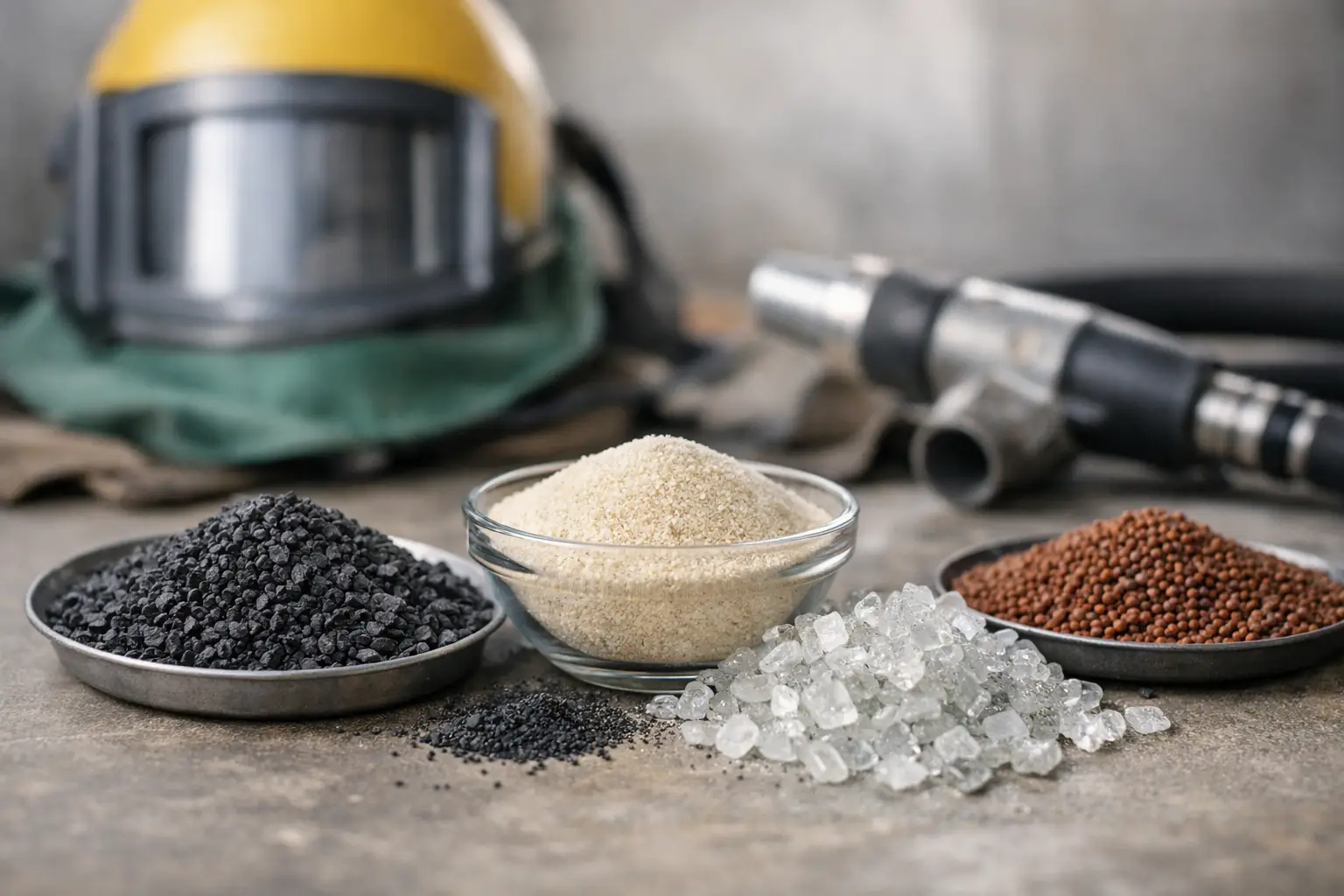
A rusty trailer frame, peeling steel railing, or aging piece of equipment rarely needs “more cleaning.” It needs the right level of surface preparation. Blasting media is the material propelled against a surface to remove coatings, corrosion, scale, and contamination before repair or refinishing. Choosing it well affects more than speed. It can determine whether the finished surface is clean, properly profiled, and ready to hold a new coating.
The word sandblasting is still commonly used, but modern abrasive blasting can involve many different media types. Sand is not automatically the best choice, and it is not suitable for every job. The right material depends on what is being removed, what is underneath it, the finish required afterward, and how the work area can be contained and cleaned.
Why Blasting Media Matters for Surface Preparation
A good coating job starts before the first coat of primer is applied. Paint, powder coating, sealers, and protective finishes need a clean surface with the correct texture to bond properly. If old paint, rust, oil, or mill scale remains in place, a new finish may look good at first but fail early.
The media used in blasting controls two key things: cutting action and surface profile. A sharp, angular abrasive cuts aggressively and leaves a more textured surface. A rounder material peens the surface with a softer impact and may be better for cleaning, polishing, or preparing certain metals without creating a heavy profile.
That difference matters when restoring steel gates, machinery, truck parts, structural components, masonry, and other durable assets. Removing visible rust is only part of the job. The goal is to create a stable foundation for what comes next.
Common Types of Blasting Media
There is no universal “best” blasting material. Each type has a purpose, along with trade-offs in speed, surface finish, cost, dust, cleanup, and suitability for the substrate.
Crushed Glass
Crushed glass is a sharp, fast-cutting abrasive often used to remove paint, rust, and coatings from metal, concrete, and masonry. It can produce a clean profile for repainting and is frequently chosen for restoration work where efficient coating removal is the priority.
Because it is angular, crushed glass can be too aggressive for thin sheet metal or delicate components when the pressure, nozzle distance, or technique is wrong. It also produces dust, so containment and proper protective equipment are essential.
Garnet
Garnet is a durable mineral abrasive known for consistent cutting performance and relatively low dust compared with some alternatives. It works well for steel, aluminum, concrete, and industrial surfaces where a controlled profile is needed before coating.
It can cost more than basic single-use media, but the cleaner finish and dependable performance may make sense for projects with higher coating requirements. For a component that will receive a premium primer or industrial finish, garnet is often worth considering.
Aluminum Oxide
Aluminum oxide is a hard, angular abrasive with strong cutting ability. It is commonly used when a tough coating, heavy corrosion, or hard surface must be stripped efficiently. It can also be reclaimed in appropriate blast cabinet systems, making it practical for repeat shop work.
Its strength is also its limitation. On soft metals, thin panels, or surfaces that must retain a smooth appearance, aluminum oxide can be overly aggressive. It is generally better suited to controlled applications where the operator can match pressure and media size to the job.
Steel Shot and Steel Grit
Steel shot is rounder and is often used for cleaning, peening, and producing a smoother finish on durable steel components. Steel grit is more angular and provides stronger cutting action and a more pronounced anchor profile.
Both are typically used in enclosed equipment or recovery systems because they are reusable and heavy. They can be effective for industrial parts, fabrication work, and repeated production applications, but they are not the simplest choice for every mobile or outdoor project.
Soda, Plastic, and Organic Media
Soda blasting uses sodium bicarbonate and is valued for gentle cleaning. It can remove paint and residue without heavily changing the underlying surface, which may be useful on sensitive substrates or certain restoration projects. However, it does not create much profile, so it is not always the right preparation method before a new coating is applied.
Plastic media can remove coatings from softer or more delicate parts with less risk of damage. Walnut shell and other organic media are also used for specialized cleaning where preserving the substrate matters more than aggressive stripping. These options are useful in the right setting, but they are not substitutes for high-production rust and scale removal on heavy steel.
Match the Media to the Surface and the Finish
The most useful question is not, “What is the strongest abrasive?” It is, “What result does this surface need?” A steel utility trailer being repainted needs a different approach than a decorative aluminum part, brick wall, or machine component headed for powder coating.
For heavy rust and failing paint on structural steel, an angular material that cuts through corrosion and leaves a coating profile is often appropriate. For thin sheet metal, the operator must reduce the risk of warping by controlling pressure, blast angle, heat buildup, and dwell time. In some cases, a less aggressive media choice is only part of the solution. Technique matters just as much.
Masonry introduces another set of concerns. Brick, stone, mortar, and concrete can be permanently altered by overly aggressive blasting. The goal may be to remove graffiti, paint, or surface contamination without eroding mortar joints or changing the face of the material. A test area is often the smartest starting point.
The planned finish should guide the preparation standard. If a surface will be primed and painted, it usually needs a clean profile that gives the coating something to grip. If the goal is simply cleaning without recoating, a gentler method may be the better choice. A clean surface is not automatically a properly prepared surface.
Grit Size, Pressure, and Technique Change the Result
Media type gets most of the attention, but grit size and blasting settings have equal influence on the outcome. Larger particles generally remove material faster and create a heavier profile. Finer particles allow more control and can produce a smoother finish, though they may take longer on thick coatings.
Air pressure, nozzle size, blast angle, and distance from the surface all affect how aggressively the media works. A skilled operator adjusts these variables throughout the job. Heavy corrosion may require a different setup than an adjacent area with thin metal, old body filler, or sound paint that must be preserved.
This is why do-it-yourself blasting can become expensive when the wrong setup is used. A surface can be etched too deeply, warped, contaminated, or left with a profile that does not match the coating system. Hiring a professional is often less about saving labor and more about avoiding a preventable restoration mistake.
Cleanup, Containment, and Safety Are Part of the Decision
Every blasting project creates material that has to go somewhere. Once old paint, rust, and abrasive leave the surface, they become part of the cleanup process. The condition of the original coating matters, especially when older paint or industrial coatings may contain hazardous materials.
Outdoor work can require careful containment to protect nearby property, landscaping, vehicles, and people. Indoor work may call for dust collection, ventilation, and recovery systems. The media itself may be manageable, but the removed coating can change how waste must be handled.
Respiratory protection, eye protection, hearing protection, gloves, and proper blast equipment are basic requirements, not optional extras. Abrasive blasting should be performed by trained personnel using the correct controls for the environment and material involved. The fastest-looking method is not a good value if it creates a health risk or damages the site.
When Professional Advice Saves Time
A clear photo and a short description can help establish the likely approach, but an on-site assessment is often needed for larger, heavily corroded, or sensitive assets. The condition of the metal, the coating history, access to the work area, and the desired final finish all affect the recommendation.
At Gorilla Sandblasting, the goal is not simply to make an item look cleaner for a day. It is to remove the material standing between the existing surface and a durable repair, coating, or restoration plan. That means selecting a blasting approach that fits the job rather than applying the same abrasive to everything.
Before scheduling blasting, decide what happens after the surface is cleaned. Will it be welded, repaired, primed, painted, powder coated, sealed, or left exposed? That answer gives the preparation process a purpose and helps ensure the work delivers a finish that lasts.